By Popular Demand!
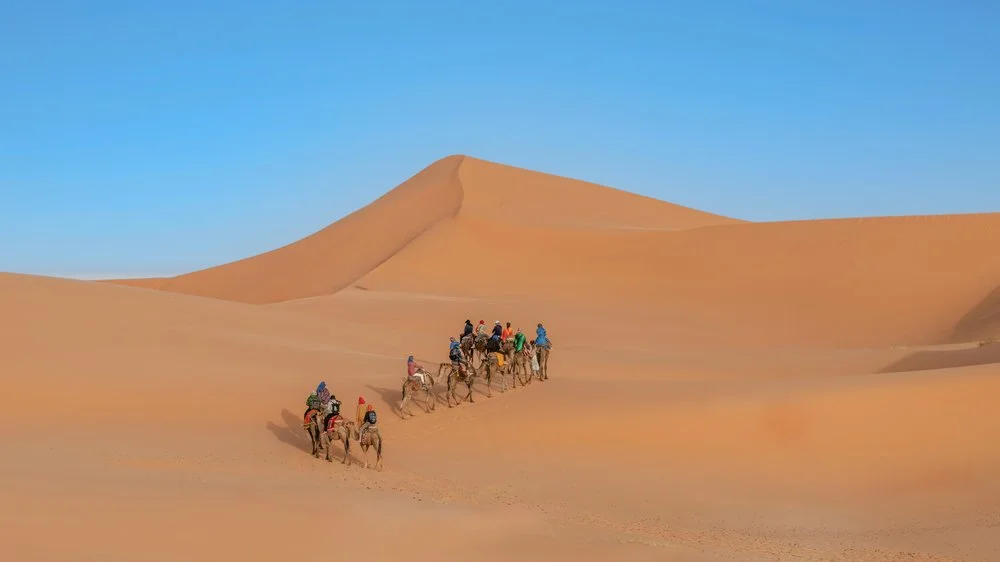
Camel trekking in the Sahara
The people have asked, and the people will receive!
Our most requested tour is a short one - three days and two nights between Fes and Marrakech. There are many reasons why people want to travel between these two cities, but everyone seems to agree on one thing. They want to experience the real Morocco along the way.
So, what makes THIS trip popular? It packs a LOT into just three days. And the memories of all those experiences will last a lifetime! it’s also more interesting than just taking the direct route down the highway or even a flight between the cities. If you are up for a little adventure and some mind-blowing scenery, please join us.
The trip begins in Fes. If you are already in Morocco, we will meet you at your hotel, riad, or any other location you name. If you are just arriving, we will meet you at the airport and begin the tour in the morning.
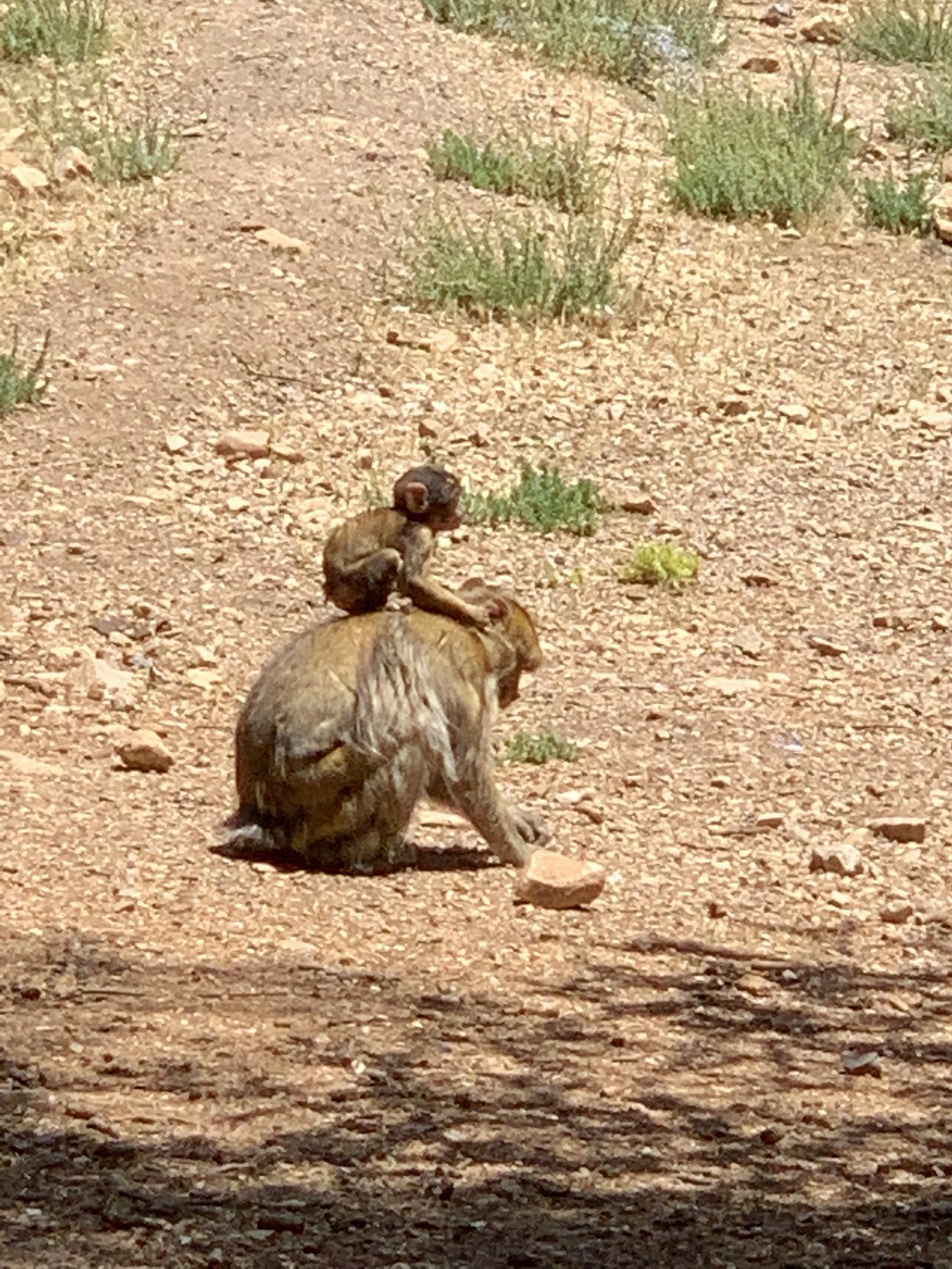
A mother barbary macaque with her baby in Azrou Forest
The first day will take you from the ancient city of Fes to the cedar forests of Azrou. You’ll see Ifrane, a mountaintop village that looks more European than Moroccan thanks to the slanting roofs and wooden houses. Why is it so different? This are gets a LOT of snow in the winter, and the sloping roofs help shed that snow before it can damage the building. You’ll also travel through the picturesque Middle Atlas mountains through the farming village of Midelt (which is the center for Morocco’s apple production) and along Ziz Valley which looks like a river of date palm trees.

Visitors on their way to the luxury camp for the night.
When you finally arrive at the edge of the Sahara desert, there will be a camel waiting to take you across the dunes to a luxury campsite where you can relax with a hot meal and live traditional musical entertainment. If you prefer some quiet time alone, you can walk just outside the ring of tents to lay on the sand and contemplate the vast display of stars, thanks to the natural darkness that happens when there are no street lights.
If you have the energy to wake up early, you can watch the sun rise over the dunes. That is magical enough where ever you are, but there is an extra bonus in the desert - the shadows shift and the sand seems to morph like a chameleon as the angle of the sun changes. THAT is the view you can’t get anywhere else. And if you just watched it, you deserve a good, hot breakfast.
After breakfast we will drive out of the desert toward Boumalne Dades. As we pass through Erfoud you’ll see many signs for fossils. Did you know this area was once the floor of a vast ocean? The fossils here are special since many of them formed in granite. An entire industry exists to create beautiful and functional items from these amazing formations. Let your driver know if you would like to stop and shop a bit.
The route you will follow today is part of the “Road of a Thousand Kasbahs.” I remember the first time I heard that. I was sure someone was just making it up, one of those harmless exaggerations that just lets the rest of us know there are a lot of kasbahs. But no! It turns out someone actually counted and there are, in fact, more than one thousand kasbahs! One thousand is just rounding off. And people say we’ll never use THAT math skill ever in our lives. (They were wrong.)
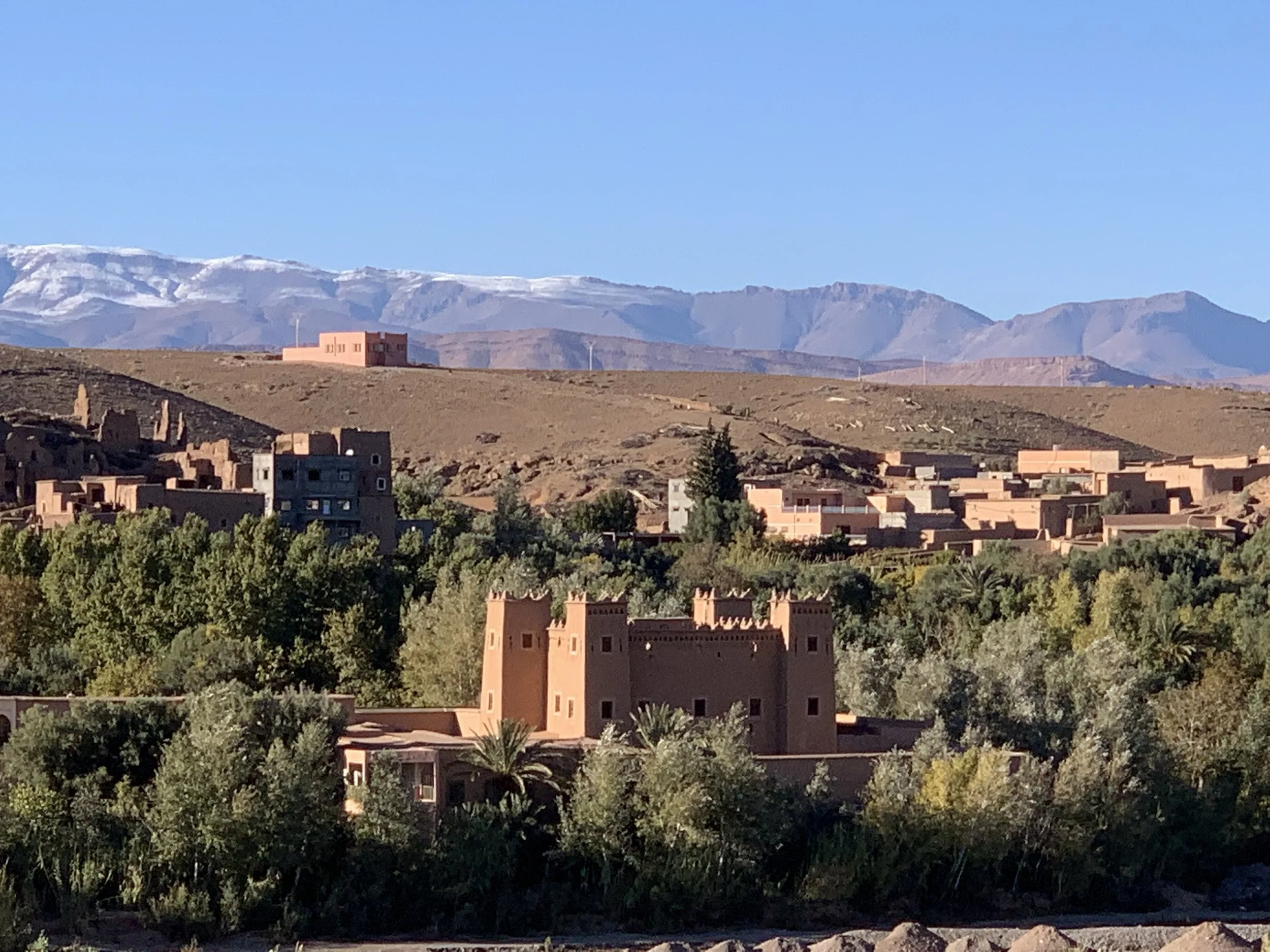
Kasbah in Kalaat M’gouna
This is a great time to explain what a kasbah actually is. Kasbahs are structures with high walls. It could be a castle-like building, or the walled area within a larger city. In southern Morocco kasbahs are typically made from rammed earth with high walls and “look-out” posts on the four corners. Inside, you often find narrow, winding alleys that would make it difficult for an invading force to move quickly - assuming they were able to penetrate the outer walls in the first place. These days, the high walls are architectural features that give us some insights into life over the last few hundred years, but back in the day they were built as security measures. Many of the kasbahs you will see today - and most kasbahs in general - are found along important trade routes and date back to the times of large camel caravans. Those caravans moved toward Marrakech along the very route this tour follows! Powerful families who tried to control the trade routes and regular people just trying to live their lives understandably needed the protection these high walls offered.
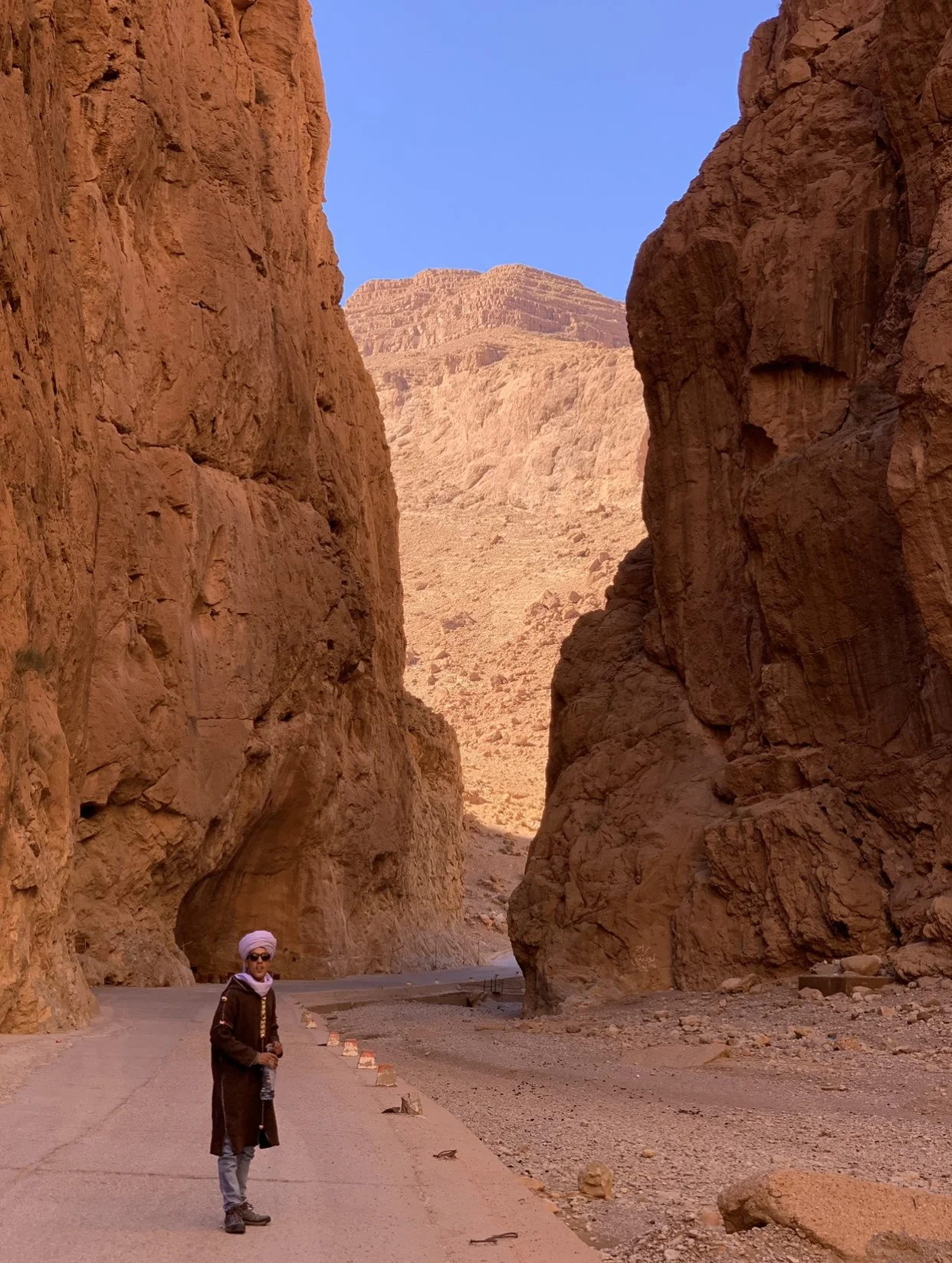
Todra Gorge, one of the deepest canyons in Morocco!
Our trip follows this route into the High Atlas Mountains through towns like Kalaat M’gouna (Rose Valley), Ouarzazate (Morocco’s Hollywood), Todra Gorge, and Ait Ben Haddou (A UNESCO World Heritage site and one of Morocco’s most famous kasbahs.) Can you imagine this tour on camel back? A couple centuries ago that would have been the only choice.
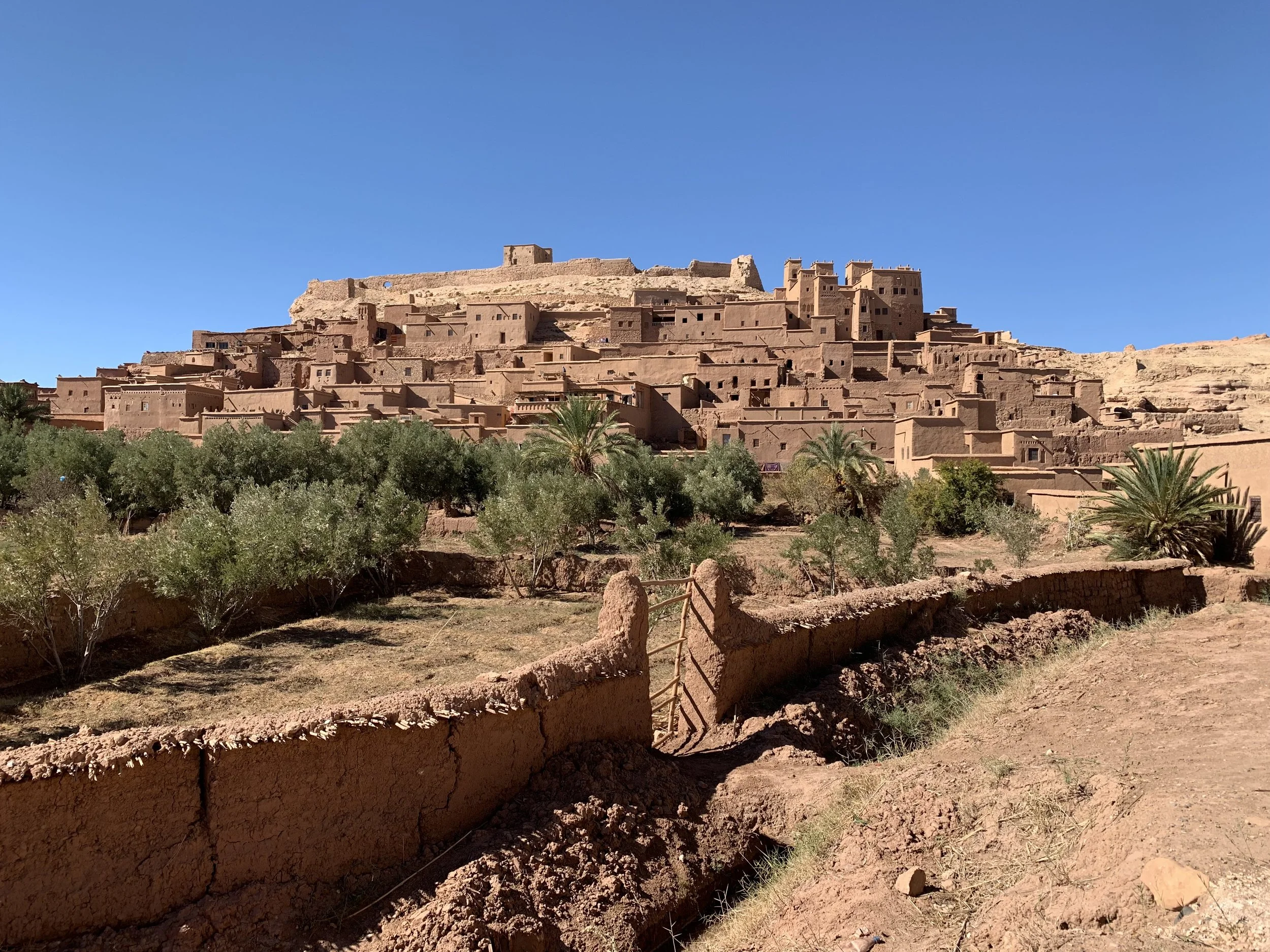
Ait Ben Haddou
Once you are up in the mountains, you’ll see breathtaking vistas in every direction you look!. Just when you think no view could possibly outdo the one you just saw, the car will go around a corner and you are amazed anew. Let your driver know when you would like to get out and take some pictures. There are some planned stops, but you can always ask for more, especially when you see a memory that absolutely needs to be in your phone!

Breathtaking views are everywhere in the High Atlas!
This tour does not include a tour of Marrakech. Our goal is simply to get you there in the most interesting and inspiring way possible. If you would like to add a day to tour the city, please let us know when you are making plans. We are happy to add that for you. We will take you to your next hotel or riad in the city, drop you at Jemaa el Fna, or leave you at the train station - where ever you need to be.
Want to read more? Click here for the tour page.
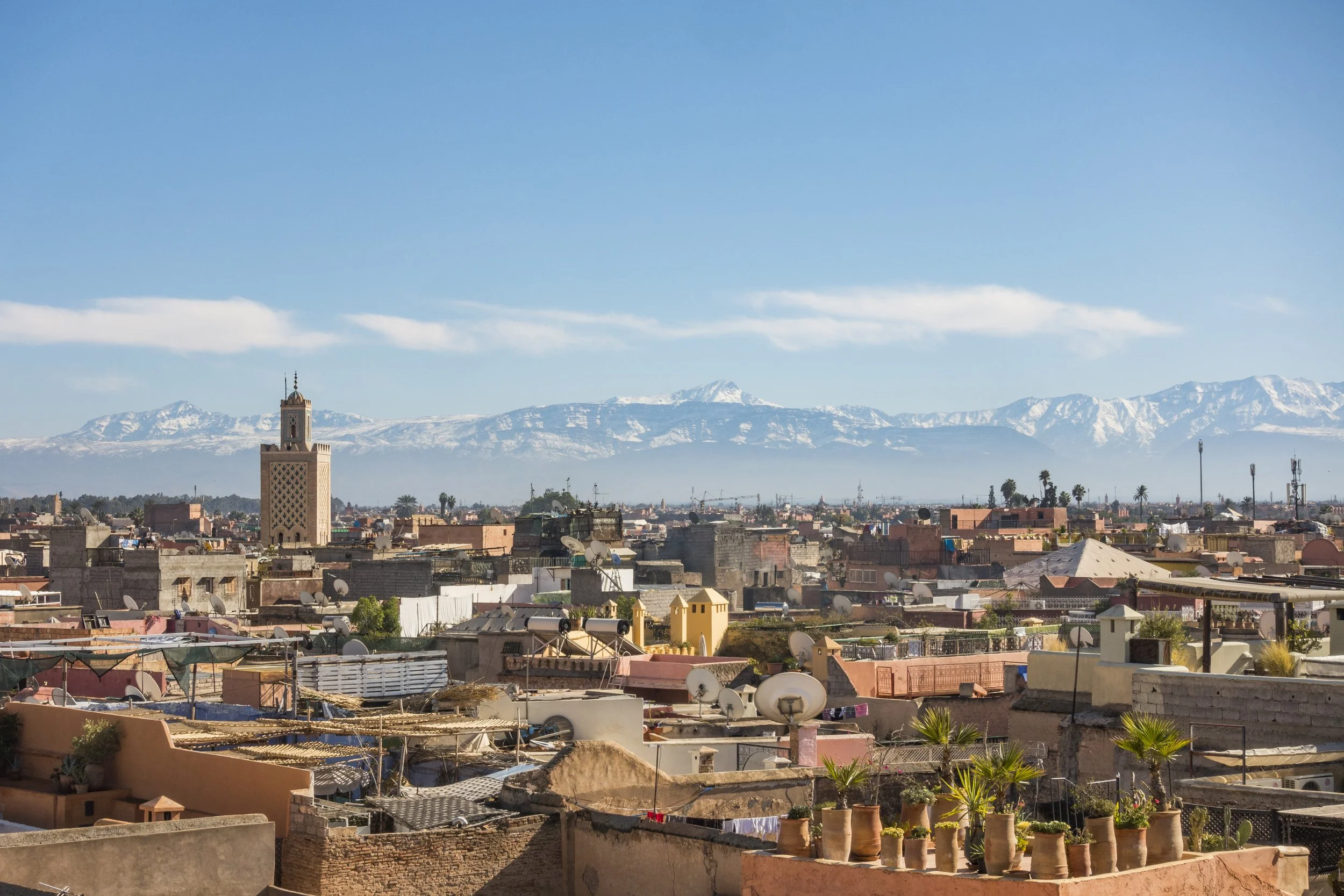
Marrakech, with the snow-covered High Atlas Mountains in the background